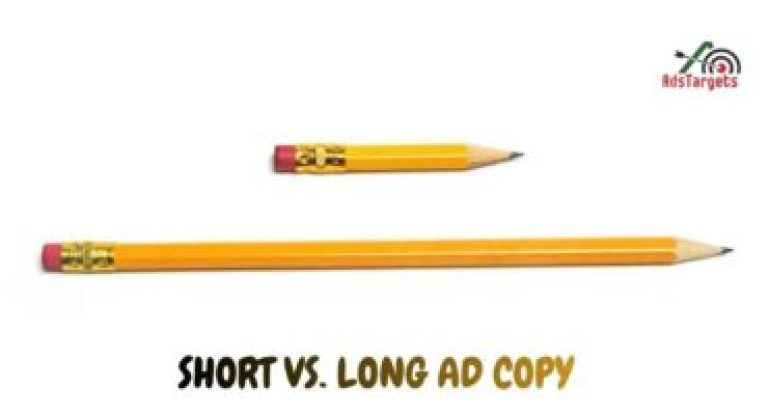
When it comes to Short vs. Long Ad Copy, there’s a simple rule of thumb that saves you a lot of guesswork: match the length of your copy to the amount of time, attention, and intent your audience has in that moment.
Short ad copy works best when you have a very small window to push someone toward a quick action. Think headlines, social media ads, cold email subject lines, push notifications, or short-form frameworks like PAS or BAB. In these situations, the reader isn’t looking for a deep explanation—they’re scanning fast and deciding even faster. They’re usually already somewhere near the bottom of the funnel, so your job is to give them a sharp nudge, not a lecture. Clear benefit, strong hook, obvious next step. That’s it.
On the flip side, long ad copy shines when things are more complex or when the product, service, or idea needs context. This includes landing pages, sales letters, detailed email newsletters, and structured frameworks like AIDA or the 4C’s. Here, the reader isn’t in a rush. They’re curious, researching, and trying to make sense of what you’re offering. They’re in the early stages of the funnel—open to learning, but not yet ready to buy. Long copy gives you room to educate, handle objections, tell stories, and build trust before asking for the sale.
The mistake most people make in the Short vs. Long Ad Copy debate is treating it like a preference issue. It’s not. It’s a context issue. Short copy isn’t “better” than long copy, and long copy isn’t automatically more persuasive. Each one does a different job at a different stage of the customer journey.
If attention is limited, go short and punchy.
If understanding is the barrier, go long and persuasive.
Get that balance right, and your copy starts working with buyer psychology instead of fighting it.
What Is Short Copy?

In direct response copywriting, short copy (often called short-form copy) is designed to trigger an immediate action. That action could be a click, a tap, a call, a download, or a quick sign-up. You see short copy everywhere—headlines, social media ads, CTAs, push notifications, display ads, and cold outreach messages—places where attention is limited and decisions are made fast.
Within the Short vs. Long Ad Copy conversation, short copy plays a very specific role. It doesn’t explain everything. It doesn’t educate in depth. Its job is to move the reader—right now.
And here’s the part most people get wrong: short copy is not easier to write than long copy. In many cases, it’s harder.
Why? Because you don’t have space to ramble, over-explain, or slowly build your case. Every word has to earn its place. Short copy must be clear, compact, emotionally sharp, and instantly actionable—all at once. There’s no room for filler, weak phrasing, or vague benefits. If your message isn’t obvious within seconds, it fails.
Great short copy usually does a few things exceptionally well:
It leads with a strong outcome or desire
It removes friction and confusion
It creates urgency or curiosity
It points to one clear next step
In the Short vs. Long Ad Copy framework, short copy works best when the reader is already problem-aware or solution-aware. They don’t need convincing—they need direction. That’s why short copy often lives at the bottom of the funnel, where momentum already exists and your job is simply to channel it.
This is also why trusted brands invest heavily in short copy. A single line, written well, can outperform an entire page of average messaging. When it’s done right, short copy is memorable, persuasive, and incredibly efficient—proof that impact has very little to do with length and everything to do with precision.
Here Are Two Great Examples:
Example 1: The Motley Fool’s Facebook Ad
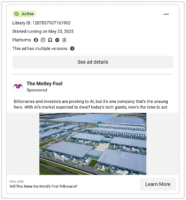
The Motley Fool is a well-known online platform focused on stock investing, market analysis, and financial research. One of its Facebook ads is a solid case study in how effective short copy works in the Short vs. Long Ad Copy debate.
The main ad copy reads:
“Billionaires and investors are pivoting to AI, but it’s one company that’s the unsung hero. With AI’s market expected to dwarf today’s tech giants, now’s the time to act.”
Just below it, the subheadline tied to the CTA asks:
“Will This Make the World’s First Trillionaire?”
This ad is doing several smart things at once—without using much text. First, it’s perfectly aligned with Facebook’s environment. Users on the platform are scrolling fast, not sitting down to do deep financial analysis. So instead of dumping charts or technical explanations, the ad leads with curiosity, status, and future payoff.
Second, it leans heavily on buzzwords and power words—billionaires, AI, trillionaire, now. These terms serve two purposes. They help the ad perform well algorithmically, and they immediately spark emotional interest. The reader doesn’t need to understand the full investment thesis to feel like they might be missing out on something big.
Third, this is a textbook example of how Short vs. Long Ad Copy should be used strategically. The short copy doesn’t try to educate or persuade in full. It simply opens a loop. The real explanation and proof are expected to happen after the click—on a landing page, article, or email sequence.
That’s the strength of short copy when it’s used correctly. It meets the audience where they are, respects their limited attention, and pushes just enough intrigue to move them forward. In the Short vs. Long Ad Copy equation, The Motley Fool clearly understands that Facebook is a short-copy battlefield—and they play it extremely well.
Example 2: Everything About Waldo’s Landing Page
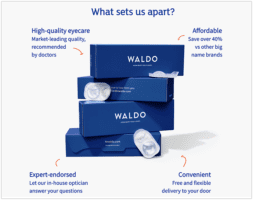
Waldo, a lens manufacturer and direct-to-consumer eyewear brand, offers a great lesson in how less can truly be more—especially in the ongoing Short vs. Long Ad Copy conversation.
At first glance, Waldo’s landing page feels calm, balanced, and intentional. The design uses near-perfect symmetry, which instantly creates a sense of order and trust. But the real magic happens in the copy. Instead of listing technical features or overwhelming visitors with product specs, Waldo leans heavily into benefits that actually matter to customers.
Phrases like “high-quality eyecare,” “affordable,” “expert-endorsed,” and “convenient” do a lot of heavy lifting here. In just a few words, the brand answers the biggest questions a potential buyer has: Can I trust this? Is it good? Is it easy? Is it worth the price? That’s smart short-form messaging at work.
This is where Waldo shines in the Short vs. Long Ad Copy debate. The landing page doesn’t try to educate the visitor on lens technology or manufacturing processes upfront. Instead, it uses concise, benefit-led copy to clearly communicate its mission and value proposition. The result? Visitors understand what Waldo stands for almost instantly—without feeling mentally taxed.
By deliberately sidestepping features and focusing on outcomes, Waldo reduces friction and decision fatigue. The copy supports the design rather than competing with it, giving the page room to breathe and the message space to land. If a user wants more detail, they can explore further—but the initial experience is smooth, reassuring, and persuasive.
In short, Waldo proves that when done right, short-form messaging can be just as powerful as long-form explanations. In the world of Short vs. Long Ad Copy, their landing page is a strong reminder that clarity, confidence, and restraint often convert better than saying everything all at once.
When to Use Short Copy?
In the Short vs. Long Ad Copy debate, short copy clearly shines when speed, clarity, and immediacy matter most. It’s built for moments where you have a narrow window to grab attention and push someone toward a quick action—before they scroll, swipe, or click away.
Short copy works especially well in fast-moving, high-noise environments like:
Social media ads (YouTube, Facebook, X)
Display ads (Amazon, Instagram)
Native ads (Taboola, Outbrain)
Search ads (Google, Bing)
Cold email outreach campaigns
SMS marketing
These formats don’t give you much real estate—or much patience from the audience. You’re competing with endless content, notifications, and distractions, so your message has to land fast and hard.
Short-form copy is the right choice when one or more of these conditions apply:
#1. Urgency is critical
Limited-time offers, flash sales, deadlines, or “act now” moments thrive on short copy. There’s no time for long explanations—just a clear reason to move.
#2. Word count is restricted
Some platforms physically limit how much you can say. Short copy forces focus, helping you communicate the core benefit without fluff.
#3. Attention spans are short
On platforms like TikTok or Instagram, users decide in seconds whether to engage. Short copy respects that behavior and delivers value immediately.
#4. Your audience makes fast decisions
If your target demographic is impulsive, deal-driven, or already familiar with your type of product, concise messaging performs better.
#5. Buyers are already primed
When your audience sits in the later stages of the funnel, they don’t need education—they need a nudge. In this phase of the Short vs. Long Ad Copy spectrum, short copy acts as a trigger, not a teacher.
The key thing to remember is that short copy isn’t about saying less—it’s about saying only what matters. When the timing is right and the intent is high, short-form messaging cuts through the noise and drives action faster than long explanations ever could.
What Is Long Copy?
In the Short vs. Long Ad Copy debate, long copy (or long-form copy) takes the opposite approach of short-form messaging. It’s a more expansive piece of writing that can run from several hundred to even thousands of words, depending on the context. Long copy gives you the room to tell richer stories, weave in literary devices, unpack complex ideas, and guide readers through a persuasive journey from curiosity to conversion.
That said, “long” doesn’t mean sloppy. Every sentence still needs to pull its weight. Your writing has to stay sharp, engaging, and structured, so readers don’t drift off before reaching your CTA.
Here are a couple of classic examples that show why long copy can be so powerful:
#1. John Carlton’s Self-Defense Ad

John Carlton, a direct-response copy legend, created a series of self-defense print ads that still resonate today—even 25 years after they were first published. This specific ad grabs attention immediately with bold claims, strategic use of italicization, capitalization, and vibrant fonts. But what makes it truly compelling is the story at its core: the underdog Tom Proctor facing bigger, stronger, and younger opponents in the ring. Despite the odds, he emerges victorious, backed by his secret fighting system.
Carlton’s storytelling in this long-form ad does more than inform—it entertains, excites, and emotionally charges readers. By the time the story concludes, the audience isn’t just interested in self-defense—they feel motivated to act. This is a textbook example of long-form copy doing what short copy can’t: building suspense, painting vivid scenarios, and nurturing the reader’s emotional investment before asking for the sale.
The lesson? Long copy works best when your goal is to educate, persuade, or immerse your audience. It’s ideal for audiences who are early in the sales funnel or exploring a product or service in depth. Unlike short copy, which relies on urgency and immediate impact, long copy leverages storytelling, logic, and emotion over a sustained period.
In the Short vs. Long Ad Copy spectrum, the choice isn’t about better or worse—it’s about matching your copy length to your audience’s needs, context, and stage in the buying journey. Long copy gives you the freedom to connect deeply, while short copy gives you the speed to act quickly. Both are powerful—but only when used in the right moments.
#2. Zane Grey’s $1 Book Club Offers
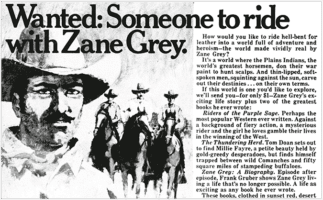
Another timeless example of long-form copy in action comes from Zane Grey’s Western book series campaigns, which ran from 1971 to 1982. These ads helped sell over 2 million copies of Riders of the Purple Sage, making it the standout title in the lineup.
The copy worked by immediately transporting readers into the Wild West. Headlines like “Wanted: Someone to Ride with Zane Grey” didn’t just inform—they sparked curiosity and imagination. From there, the ads walked readers through some of Zane’s most memorable adventures, drawing them deeper into the story while subtly guiding them down the sales funnel. Each ad ended with a prominent mailing coupon, inviting readers to join the book club and secure their copy.
The offer itself was simple but clever: start with $1 for three books, then gradually increase the price for future editions or special leather-bound volumes. The copy also evolved to match the audience’s expectations—first calling them subscribers, then book club members, and finally library members, reflecting a more aspirational identity.
This campaign is a perfect showcase of why long copy works where short copy can’t. It allows for immersive storytelling, detailed context, and strategic upselling—all while keeping readers engaged. In the Short vs. Long Ad Copy conversation, it demonstrates that long-form messaging shines when your goal is to educate, entertain, and persuade over time rather than trigger an immediate reaction.
Even if some upselling techniques would raise eyebrows today, the core lesson is timeless: compelling storytelling in long copy can create emotional investment, build trust, and guide readers toward taking action—something short-form copy alone can rarely achieve.
When to Use Long Copy
In the Short vs. Long Ad Copy debate, long copy clearly has its own sweet spot. It’s designed for situations where you need room to educate, persuade, and guide readers through a more complex buying journey. Unlike short copy, long-form writing gives you space to unpack ideas, build trust, and address objections—without rushing the reader.
Long copy performs best in formats such as:
Sales letters
Direct mail campaigns
Single-page, single-product or service websites
Extended email newsletters
Highly targeted email outreach sequences
Infomercial scripts
You should reach for long-form copy when:
Your product or service is complex or highly technical and needs explanation
Pricing is higher than the market norm, requiring justification and reassurance
You need to tackle multiple objections or concerns upfront
Your audience is in the early stages of the sales funnel—curious, learning, and evaluating options
There are no strict word limits, so you can tell the full story without cutting corners
Essentially, long copy lets you educate, persuade, and inspire action over time, rather than relying on instant reactions. In the Short vs. Long Ad Copy spectrum, it shines when your goal is to nurture a relationship, establish authority, and make readers feel confident enough to invest in what you’re offering.
When used thoughtfully, long copy doesn’t just sell a product—it tells a story, builds trust, and transforms hesitant prospects into loyal customers.
The Great Copy Length Debate
When it comes to Short vs. Long Ad Copy, the conversation is far from settled. Copywriters and marketers often fall into three camps, each with a strong opinion:
# Camp 1 – Short copy is king
Advocates for short-form copy argue that quick, punchy messages are ideal for today’s fast-scrolling, attention-starved audiences. With attention spans shrinking and users constantly swiping through content, short copy is seen as the ultimate weapon for immediate engagement and fast conversions. Its simplicity makes it perfect for social media ads, display campaigns, and cold outreach.
# Camp 2 – Long copy rules
On the other side, proponents of long-form copy emphasize the power of information. Long copy gives you room to educate, persuade, and handle objections in detail. For products or services that are complex, high-priced, or require careful consideration, long copy allows prospects to fully understand the value being offered. Dropouts aren’t seen as failures; they simply weren’t the right audience to begin with.
#Camp 3 – It depends
The most balanced view comes from Camp 3: both short and long copy have their place. Short copy works best for quick-hit ads or campaigns designed to trigger immediate action. Long copy is ideal for nurturing, educating, and convincing prospects who need more context before committing. By understanding the Short vs. Long Ad Copy spectrum, you can strategically choose the right format based on your audience, platform, and stage in the sales funnel.
At the end of the day, it’s not about declaring a winner—it’s about knowing when to use each type of copy to maximize conversions, engagement, and ROI. Mastering both short and long-form approaches lets you craft campaigns that hit the right note every time, no matter the platform or audience.
Key Differences: Short Copy vs. Long Copy
When it comes to Short vs. Long Ad Copy, understanding the differences can help you choose the right approach for your audience, platform, and product. Here are the five major distinctions:
#1. Length and format
Short copy is all about brevity. It’s tight, direct, and usually under 1,000 words. Think punchy taglines like Adidas’ “Impossible is Nothing”—a few words that spark action instantly.
Long copy, on the other hand, stretches beyond 1,000 words, giving you room to tell a detailed story or explain a complex offer. Classic examples include Joe Sugarman’s BluBlocker ads, which use narrative and education to persuade readers.
#2. Use cases
Short copy thrives when you need instant engagement. It’s perfect for social media, mobile ads, pop-ups, giveaways, or simple products and services. Its job is to grab attention and push readers toward action immediately.
Long copy shines when your goal is to educate, persuade, and emotionally connect. It works well for high-ticket items, technical products, or offers that require a story to build desire and trust.
#3. User engagement
Short copy targets busy users who scroll fast and skim content. It’s optimized for mobile-first experiences and social feeds where attention spans are fleeting.
Long copy engages readers who are genuinely interested and willing to spend time exploring your message. These readers might read your content multiple times before deciding, making long-form ideal for deeper engagement and nurturing.
#4. Objection handling
Because short copy is concise, it can’t tackle every potential objection. It’s designed to spark curiosity, urgency, or excitement rather than educate fully.
Long copy gives you space to handle objections, share detailed testimonials, provide FAQs, and highlight every product or service benefit. It’s built to preempt doubts and guide prospects toward a confident decision.
#5. Conversion tactics
Short copy performs best in low-risk situations: inexpensive products, impulse buys, or when your audience already trusts your brand (think Apple product pages). Its goal is to nudge rather than teach.
Long copy is crucial for higher-stakes sales, complex products, or when trust needs to be earned before the offer is introduced. It gives your audience the context, reassurance, and motivation to make a more considered purchase.
In the Short vs. Long Ad Copy debate, there’s no one-size-fits-all answer. Short copy cuts through noise quickly, while long copy builds connection, trust, and understanding. The key is knowing your audience, your platform, and the stage of the funnel—and then choosing the approach that will convert best.
Copy Should Be “Long Enough and No Longer”
When it comes to Short vs. Long Ad Copy, one principle professional copywriters swear by is: “long enough and no longer.”
What does this mean? Simply put, your copy should be exactly as long as it needs to be to achieve your goal—and no longer. There’s no room for filler, quirky jokes that don’t land, or clever wordplay that distracts. Every sentence must serve a purpose: grab attention, build trust, handle objections, or drive action. Anything beyond that risks diluting your message and lowering conversions.
Legendary copywriter Dan Kennedy summarized this idea neatly, and a Reddit user distilled it into a practical guide for choosing copy length:
#1. High-emotion, expensive products: Use long copy (e.g., a wedding dress). You need space to educate, build trust, and connect emotionally.
#2. High-emotion, cheap products: Short copy works best (e.g., a winter dog coat). A quick emotional nudge is enough to prompt a purchase.
#3. Low-emotion, expensive products: Go long (e.g., rare earth metals like Neodymium). Readers need detailed info to make a considered decision.
#4. Low-emotion, cheap products: Stick with short copy. Brevity wins when stakes are low.
In essence, whether you lean toward short or long copy depends on the product, audience, and emotional impact of your offer. Short vs. Long Ad Copy isn’t about a magic word count—it’s about matching the right length to the right situation. Follow this principle, and your copy won’t just exist—it will convert.
How Copy Length Evolves Over Time
When it comes to Short vs. Long Ad Copy, context and familiarity matter more than you might think. Take Coca-Cola as an example: when Coke was still a new, unfamiliar product, marketers needed long-form copy to explain what it was, highlight its benefits, and show how it fit into people’s daily lives. Every ad had to educate, persuade, and build trust—no shortcuts.
Fast forward to today, and Coca-Cola is one of the most recognized brands on the planet. Its marketing now relies almost entirely on visual storytelling and minimal text. A single image or clever visual cue is often enough to convey the product, value, and brand identity. The copy has naturally shrunk because the audience already “gets it.”
This illustrates a key point in the Short vs. Long Ad Copy debate: copy length isn’t static. It shifts with attention spans, channel constraints, generational habits, and market familiarity. New products and audiences usually require longer copy to educate and persuade. Established brands with a well-known value proposition can lean on brevity, letting visuals, minimal text, or even a simple product image carry the message.
In short, your copy should evolve as your market evolves. Start with long-form to teach, inform, and convince, then trim down as understanding grows. The sweet spot is always “long enough to inform, short enough to engage,” ensuring your copy converts without wasting words.
Conclusion
When it comes to Short vs. Long Ad Copy, context and familiarity matter more than you might think. Take Coca-Cola as an example: when Coke was still a new, unfamiliar product, marketers needed long-form copy to explain what it was, highlight its benefits, and show how it fit into people’s daily lives. Every ad had to educate, persuade, and build trust—no shortcuts.
Fast forward to today, and Coca-Cola is one of the most recognized brands on the planet. Its marketing now relies almost entirely on visual storytelling and minimal text. A single image or clever visual cue is often enough to convey the product, value, and brand identity. The copy has naturally shrunk because the audience already “gets it.”
This illustrates a key point in the Short vs. Long Ad Copy debate: copy length isn’t static. It shifts with attention spans, channel constraints, generational habits, and market familiarity. New products and audiences usually require longer copy to educate and persuade. Established brands with a well-known value proposition can lean on brevity, letting visuals, minimal text, or even a simple product image carry the message.
In short, your copy should evolve as your market evolves. Start with long-form to teach, inform, and convince, then trim down as understanding grows. The sweet spot is always “long enough to inform, short enough to engage,” ensuring your copy converts without wasting words.
Related Post: 6 Common Ad Copy Pitfalls And How To Fix Them For Stronger Results